Honey Jars Buying Tips for Importers and Suppliers Worldwide?
In the competitive world of honey exports, selecting the right honey jars is crucial for success. Experts like Dr. Melissa B. Sweet, a leading authority in honey packaging, emphasize that "the right jar not only preserves the honey but also enhances its appeal." This statement reflects the importance of aesthetics and functionality in packaging, which can significantly impact sales.
Understanding market preferences is essential for importers and suppliers. Many suppliers overlook the nuances in design and material of honey jars. Consumers often gravitate towards eco-friendly options, yet they also seek unique designs that stand out. In this dynamic market, it's vital to balance sustainability with attractive presentation.
Reflecting on these considerations, suppliers should ask: are they truly meeting consumer demands? Investing time in research can lead to better choices in honey jars. Ignoring market trends can result in missed opportunities. Thus, a keen eye on packaging trends is as important as the quality of the honey itself.

Understanding the Global Honey Market Trends for Importers and Suppliers
The global honey market is constantly evolving. Importers and suppliers must stay updated on emerging trends. Fluctuations in climate affect honey production significantly. Changes in consumer preferences also shift demand patterns. This landscape demands a keen understanding of market nuances.
One notable trend is the growth in organic honey. Many consumers are now prioritizing natural products. This shift reflects a broader interest in health and wellness. Sustainability is another key factor. More suppliers are adopting eco-friendly practices, appealing to conscious buyers. However, navigating these trends can be challenging.
Market research is essential for informed decision-making. Gathering data on regional preferences can provide an edge. Attending trade shows helps create valuable networks. It's crucial to stay adaptable in this dynamic market. Importers must reflect on their strategies regularly. Adjustments may be necessary based on shifting trends.
Honey Jars Buying Tips for Importers and Suppliers Worldwide
| Aspect |
Details |
| Market Insights |
The global honey market is projected to grow at a CAGR of 5.5% from 2023 to 2028. |
| Import Regulations |
Different countries have varying regulations; ensure compliance with local food safety laws. |
| Quality Standards |
Verify that honey meets international quality standards like ISO 12824 or Codex Alimentarius guidelines. |
| Sourcing Options |
Consider sourcing directly from beekeepers for better pricing and quality control. |
| Packaging Preferences |
Glass jars are preferred for premium markets; plastic jars are more cost-effective for bulk buyers. |
| Sustainability Trends |
Consumers are increasingly seeking sustainably sourced and organic honey products. |
| Pricing Trends |
Price varies based on origin, floral source, and market demand; average price is around $3 to $8 per jar. |
| Consumer Preferences |
Health benefits and artisanal qualities are key buying factors for consumers. |
Identifying Quality Standards for Honey Jars in International Trade
When importing honey jars, it's essential to identify quality standards that align with international trade norms. According to the International Honey Market Report, about 30% of honey sold globally fails to meet these standards. This highlights the difficulty in ensuring product quality. Evaluating jars based on material safety and sealing integrity is crucial. Glass jars are often preferred for their chemical resistance and ability to preserve honey quality.
Standards like ISO 12824 for honey packaging offer guidelines on dimensions and labeling. Importers must ensure that jars not only protect the honey but also comply with national food safety requirements. The USDA, for instance, requires specific labeling for honey jars to prevent consumer deception. Periodic assessments of suppliers' production facilities can help ensure these standards are consistently met. Documenting these checks is vital for maintaining traceability in the supply chain.
Quality can vary based on geographical origins. For example, honey from certain regions may contain higher antioxidant levels, creating market differentiation. Importers must be aware of such attributes. Not all suppliers may follow strict protocols, and this inconsistency can lead to challenges in maintaining quality across shipments. An effective partnership with reliable suppliers includes regular communications about quality control measures and audits.
Choosing Sustainable Packaging for Honey Jar Exports
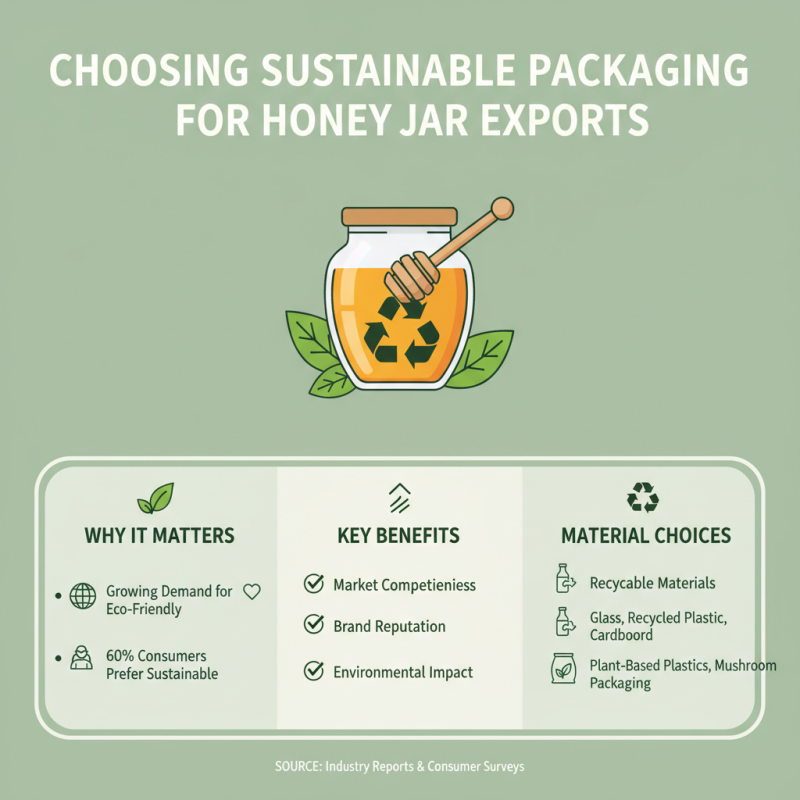
When considering honey jar exports, sustainable packaging is crucial. The industry sees a growing demand for eco-friendly solutions. Reports indicate that 60% of consumers prefer brands with sustainable practices. This trend highlights the importance of using materials that are recyclable or biodegradable.
Choosing the right materials can impact the entire supply chain. Glass jars are popular, but they are heavy and not always eco-friendly. On the other hand, innovative alternatives like plant-based plastics are emerging. Research suggests they can reduce overall carbon footprints by up to 30%. However, these options can be costly and may not always perform well in preserving honey's quality.
Moreover, labeling and certifications must reflect sustainability efforts. Transparency builds consumer trust. Not every supplier manages this well. Some may claim sustainability but lack genuine ecological practices. Importers need to verify claims to ensure a reliable supply chain. Addressing these challenges can enhance brand integrity and foster a more sustainable honey market.
Navigating Import Regulations and Tariffs on Honey Products
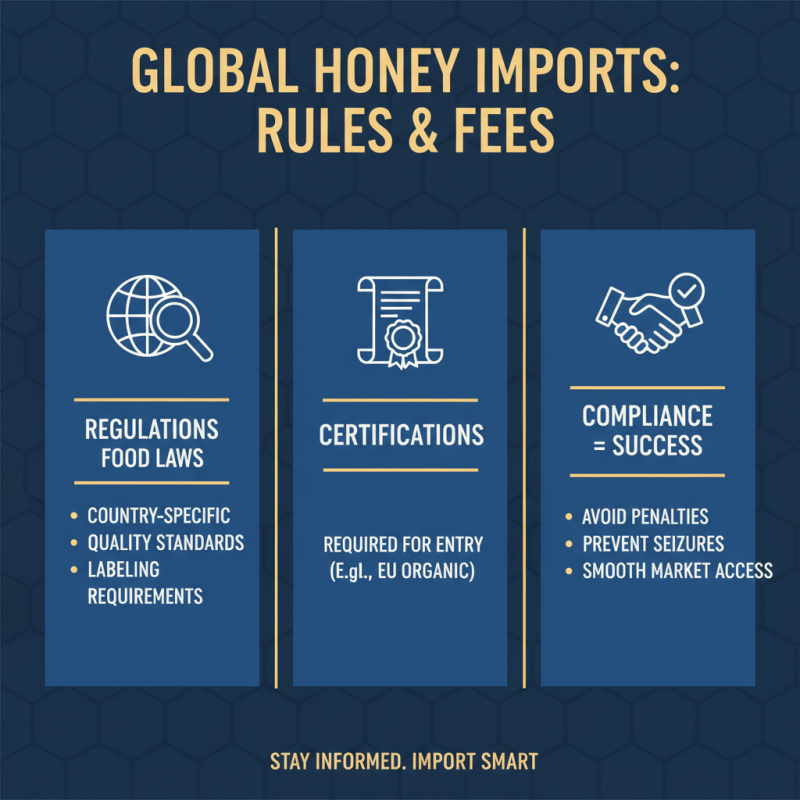
When importing honey products, understanding import regulations is essential. Each country has unique rules that govern the import of food items. These rules often focus on quality standards and labeling requirements. For instance, some regions require specific certifications prior to entry. Avoiding compliance can lead to penalties or product seizures.
Tariffs on honey can also impact costs. Importers should research current duty rates, which can vary. Some countries may offer exemptions or reduced rates based on trade agreements. It's crucial to calculate total costs, including shipping, handling, and tariffs, to ensure profitability.
Missteps can occur during the import process. Some importers underestimate the time needed for customs clearance. Others overlook necessary documentation. Keeping proper records and understanding local regulations can mitigate risks. Each detail can affect your import success, so diligence is key.
Establishing Reliable Supply Chains for Honey Jar Distribution Worldwide
Establishing a reliable supply chain for honey jar distribution is vital for importers and suppliers. Focus on the sourcing process. Understanding local markets and their demands is crucial. Importers should research various regions to identify quality suppliers. This ensures a steady supply of products that meet market needs.
Quality control plays a significant role. Suppliers must enforce strict quality checks at every stage. This includes sourcing raw materials to final packaging. Transparency in the supply chain fosters trust. Both sides must communicate openly about challenges. Issues like delays or quality inconsistencies must be addressed quickly.
Logistics is another key factor. Efficient transportation guarantees timely delivery. Importers should explore multiple shipping options. Flexibility can mitigate some supply chain risks. However, not every method will suit every situation. Consider local regulations and customs. These factors can complicate the distribution process. It is important to adapt strategies accordingly, or rethink approaches entirely.
Honey Jars Distribution Trends
This chart depicts the distribution percentage of honey jars across different regions globally. Asia leads with 35% of the total supply, followed by North America and Europe with 25% and 20%, respectively. South America and Africa share the remaining percentage.