Why Are Bottle Caps Essential for Packaging Solutions?
In today's competitive market, packaging solutions play a vital role. Among these, bottle caps are often overlooked. However, they are crucial for maintaining product quality and safety. John Smith, an expert in packaging technology, once stated, "Bottle caps are the unsung heroes of packaging." This highlights their significance in the industry.
Bottle caps ensure that contents remain fresh and uncontaminated. They provide a reliable seal for beverages, pharmaceuticals, and cosmetics. Without a proper cap, even a tiny opening can lead to spoilage. Consumers often assume a product is safe without realizing bottle caps protect it.
Despite their importance, not all bottle caps are created equal. Many designs struggle with user-friendliness, affecting user experience. Brands must consider both functionality and accessibility. As the industry evolves, innovation remains essential. Reflecting on these challenges may lead to better packaging solutions. Emphasizing the value of bottle caps can elevate a brand's reputation and customer trust.

Importance of Bottle Caps in Maintaining Product Freshness and Safety
Bottle caps play a vital role in ensuring product freshness and safety. They are often the last line of defense against contamination. A study by the Packaging Institute shows that over 75% of consumers believe that packaging is crucial in maintaining quality. This finding underscores the importance of effective sealing.
Plastic and metal caps provide different sealing methods. While plastic caps are lightweight and cost-effective, metal caps offer excellent barrier properties. According to a recent industry report, nearly 50% of beverages spoiled can be attributed to inadequate sealing. This statistic highlights the seriousness of product degradation due to poor packaging.
The design of bottle caps also influences user experience. Easy-to-open designs can improve consumer satisfaction. Yet, many caps fail to balance usability and security adequately. In some cases, caps may loosen, risking exposure to air and moisture, which compromises freshness. Awareness of these challenges is essential for manufacturers. Continuous improvement in cap design could enhance product safety and prolong shelf life.
Material Technologies Used in Bottle Cap Production and Their Benefits
The production of bottle caps involves various material technologies that significantly enhance packaging efficiency. High-density polyethylene (HDPE) is a common choice. Studies have shown that HDPE provides excellent barrier properties, making it suitable for preserving the freshness of the contents. It is lightweight and cost-effective, with over 30 million tons produced annually worldwide for various applications.
Polypropylene (PP) is another popular material. Its chemical resistance and robust mechanical properties make it ideal for food and beverage industries. A recent report indicated that PP accounts for approximately 25% of all plastic used in bottle caps. This material's flexibility allows for a tighter seal, reducing the risk of leakage.
However, the environmental impact of these materials is a growing concern. While HDPE and PP are recyclable, only about 9% of plastic waste is actually recycled globally. This raises questions about sustainability. The industry must strive for innovations that improve recyclability while maintaining the integrity of the product. Continuous research is needed to explore alternative sustainable materials and ensure that packaging solutions evolve alongside consumer expectations.
Why Are Bottle Caps Essential for Packaging Solutions? - Material Technologies Used in Bottle Cap Production and Their Benefits
| Material |
Benefits |
Common Applications |
Recyclability |
| Polypropylene (PP) |
Durable, resistant to chemicals, and lightweight |
Beverage bottles, food containers |
Yes, widely recyclable |
| Polyethylene Terephthalate (PET) |
Excellent clarity, high strength, and good barrier properties |
Soda and water bottles |
Yes, fully recyclable |
| Aluminum |
Lightweight, corrosion-resistant, and good sealing properties |
Soft drink cans, certain food closures |
Yes, infinitely recyclable |
| Cork |
Natural, provides a good seal, and adds aesthetic value |
Wine bottles |
Yes, biodegradable and renewable |
| Glass |
Non-reactive, good barrier properties, and recyclable |
Various food and beverage containers |
Yes, 100% recyclable |
Environmental Impact of Bottle Caps and Sustainable Packaging Solutions
Bottle caps play a crucial role in the packaging industry. They seal bottles securely, preserving contents and extending shelf life. Yet, the environmental impact of these small components can be significant. According to a report by the National Association for PET Container Resources, around 30 billion plastic bottle caps end up in landfills every year in the U.S. alone. This adds to the already critical issue of plastic pollution in oceans and waterways.
Sustainable packaging solutions are emerging as an essential focus for manufacturers. Biodegradable bottle caps made from plant-based materials offer a promising alternative. Research suggests these caps can decompose within a few months in suitable conditions. However, the production of sustainable materials often comes with its own environmental challenges. It is important to assess the full lifecycle of these products to ensure they truly reduce the ecological footprint.
Consumer awareness is growing, yet the market still faces hurdles. Many people remain unaware of the recycling potential of bottle caps. Adjusting disposal habits could significantly reduce waste. A 2020 study highlighted that proper recycling could reclaim up to 60% of plastic waste. Therefore, improving public education on this matter is essential for creating a more sustainable future.
Environmental Impact of Bottle Caps and Sustainable Packaging Solutions
Innovations in Bottle Cap Design That Enhance User Experience and Functionality
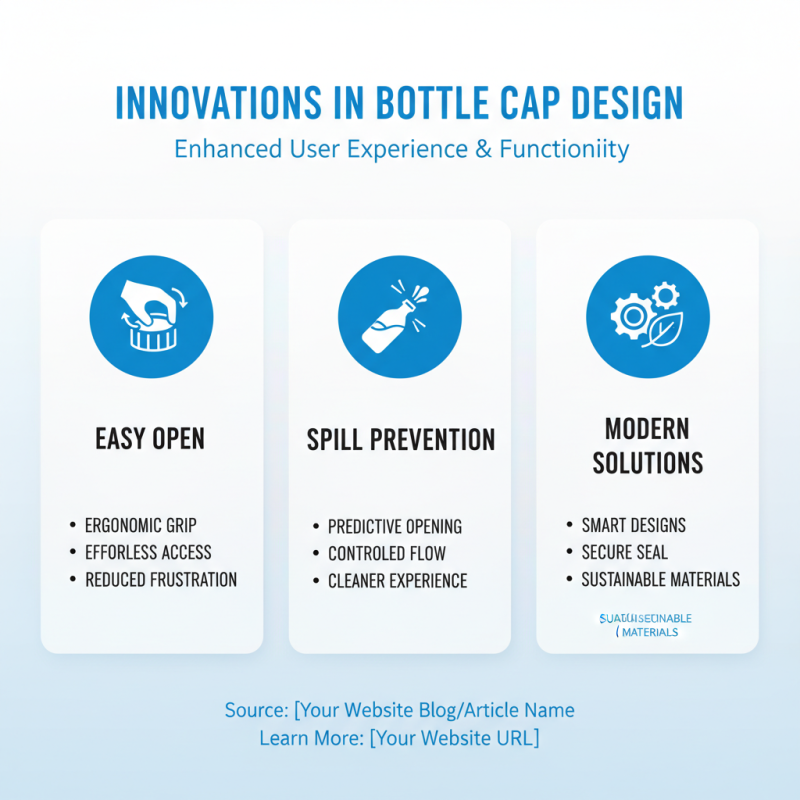
Innovations in bottle cap design have transformed packaging solutions significantly. Enhanced user experience is a key focus. Modern caps now feature ergonomic designs for better grip. Users can open bottles with ease, reducing the frustration of traditional caps. Some caps even offer a predictive opening feature. This design helps to prevent spills, ensuring a cleaner experience.
Moreover, advanced materials are being used in cap manufacturing. These materials are lightweight yet durable. They help maintain product freshness for longer periods. Some caps incorporate child-resistant mechanisms, ensuring safety in households. This innovation reflects a growing concern for consumer safety and accessibility.
However, challenges remain. Not all designs are universally intuitive. Some caps can still be difficult for individuals with limited mobility. The industry must continue to listen to user feedback. Enhancing functionality while remaining user-friendly is essential for future innovations. Continuous improvement is key, as there's always room for a better experience.