Why Choose Eco Friendly Beer Bottles for Your Business?
In an era where sustainability matters, eco-friendly beer bottles are gaining significant traction. According to a recent industry report by IBISWorld, the global beer packaging market is projected to reach $25 billion by 2025. This shift is largely driven by consumer demand for sustainable practices. As Alex Schneider, a leading expert in the beer packaging industry, once said, “Choosing sustainable materials is not just a trend; it's becoming essential for brands that want to thrive.”
The beer bottles we choose reflect our commitment to the environment. Traditional glass beer bottles, while classic, often burden landfills. Eco-friendly options reduce waste and minimize carbon footprints. Furthermore, a Nielsen report indicates that 66% of consumers are willing to pay more for sustainable products. This statistic highlights a growing opportunity for businesses to align with consumer values and boost brand loyalty.
Nonetheless, the transition to eco-friendly beer bottles isn't without challenges. There may be higher upfront costs, and not all facilities are equipped to handle these materials. Businesses must weigh these factors carefully. As the industry evolves, staying informed and adaptable will be key to success. By embracing sustainable practices, companies can stand out in a crowded market and resonate with eco-conscious consumers.
Benefits of Eco Friendly Beer Bottles for Businesses
Eco-friendly beer bottles present a significant advantage for businesses. As consumers become more environmentally conscious, the demand for sustainable packaging rises. A report by Smithers indicates that sustainable packaging could reach a valued market of $500 billion by 2024. This shift opens up opportunities for brands that prioritize eco-friendly options.
Using eco-friendly bottles can reduce production costs in the long run. These bottles often require less energy for manufacturing compared to traditional glass. A study from the Glass Packaging Institute shows recycling glass uses 40% less energy than producing new glass. Thus, businesses can lower their carbon footprint while saving on energy costs.
**Tips**: Consider using local suppliers for your eco-friendly bottles. This reduces transportation emissions and supports local economies. Engage customers by promoting your commitment to sustainability on social media. Transparency can help in building trust.
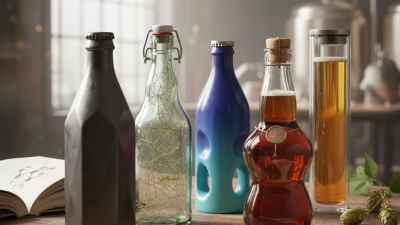
Furthermore, there’s a visual appeal to eco-friendly packaging. Unique designs can set a brand apart on crowded shelves. However, companies must ensure that the eco-friendly claim has real substance. Misleading claims can lead to distrust among consumers. Reflecting on your approach to sustainability can enhance your brand’s credibility.
Why Choose Eco Friendly Beer Bottles for Your Business? - Benefits of Eco Friendly Beer Bottles for Businesses
| Benefit |
Description |
Impact on Business |
| Environmental Sustainability |
Using eco-friendly bottles reduces waste and pollution, promoting a healthier planet. |
Enhances brand image and attracts environmentally conscious customers. |
| Cost Savings |
Sustainable materials can lead to lower production costs in the long run. |
Increases profit margins as production efficiency improves. |
| Customer Loyalty |
Consumers are willing to support brands that prioritize sustainability. |
Builds a loyal customer base and increases repeat purchases. |
| Market Differentiation |
Clearly eco-friendly practices can set a business apart from competitors. |
Attracts new customers who seek out sustainable options. |
| Compliance with Regulations |
Adopting eco-friendly solutions helps in meeting government regulations. |
Reduces risks associated with potential fines or restrictions. |
Environmental Impact of Traditional Beer Bottles
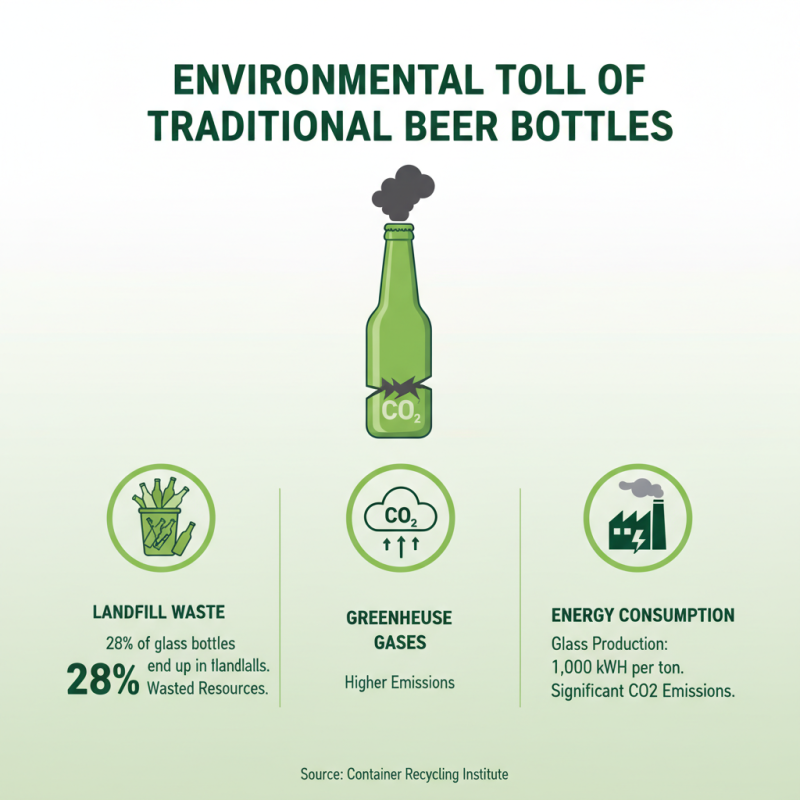
Traditional beer bottles significantly impact the environment. According to the Container Recycling Institute, 28% of glass bottles end up in landfills. This leads to higher greenhouse gas emissions and wasted resources. The production of glass is energy-intensive, consuming approximately 1,000 kilowatt-hours per ton. This energy use results in significant carbon dioxide emissions.
Recycling rates for glass bottles are often low. Only 30% of glass bottles are recycled, while the rest contribute to pollution. Studies show that producing new glass bottles from recycled material uses 40% less energy than from raw materials. Businesses that switch to eco-friendly bottles can reduce their carbon footprint significantly.
Transitioning to sustainable bottle options can enhance brand reputation. Many consumers are concerned about environmental issues. Research from Nielsen indicates that 66% of global consumers are willing to pay more for sustainable goods. Businesses can attract these customers by adopting eco-friendly practices. However, the transition may face challenges. Sourcing alternative materials can be difficult, and initial costs may rise. Continued education on sustainability is crucial in overcoming these hurdles.
Consumer Preferences for Sustainable Packaging
Consumer preferences are shifting towards sustainable packaging. A recent study by Nielsen revealed that 73% of millennials are willing to pay more for eco-friendly products. This trend indicates a significant market opportunity for businesses considering eco-friendly beer bottles. The sustainable packaging market is expected to reach $500 billion by 2028, as consumers increasingly demand environmentally responsible options.
Eco-friendly beer bottles not only resonate with consumer values but also enhance brand reputation. According to a report by McKinsey, businesses adopting sustainable practices experience higher customer loyalty. However, companies must be cautious. Transitioning to sustainable materials can present challenges. For instance, sourcing reliable suppliers and ensuring the quality of packaging must be prioritized.
While the benefits are clear, companies also face hurdles. The initial costs of eco-friendly materials can be higher. Some businesses worry about consumer acceptance. A critical reflection is needed to balance cost, quality, and sustainability. Nonetheless, the growing evidence suggests that investing in eco-friendly options can lead to long-term gains, aligning with the values of modern consumers.
Cost Analysis of Eco Friendly versus Conventional Bottles
When analyzing the cost of eco-friendly beer bottles versus conventional options, several factors emerge. Eco-friendly bottles often have higher upfront costs. However, these costs can be offset by long-term savings. For example, brands can reduce waste disposal fees and benefit from potential tax incentives. The initial investment may be daunting, but the long-term benefits are worth considering.
Additionally, eco-friendly bottles appeal to a growing consumer base that prioritizes sustainability. This shift can result in increased sales. The willingness of customers to pay a premium for eco-friendly products is also a vital factor. Many businesses are seeing a positive return on investment. They are realizing that sustainability can enhance brand loyalty. However, companies must carefully balance their eco-friendly choices with market demands.
Another aspect to consider is the supply chain. Sourcing eco-friendly materials may pose challenges. Finding reliable suppliers can be difficult. Inconsistent supply can disrupt production and increase costs. Companies must plan ahead and remain flexible. This requires a commitment to sustainability and a willingness to adapt. The conversation around cost versus values will continue evolving as eco-friendly options gain traction.
Innovative Materials Used in Eco Friendly Beer Bottles
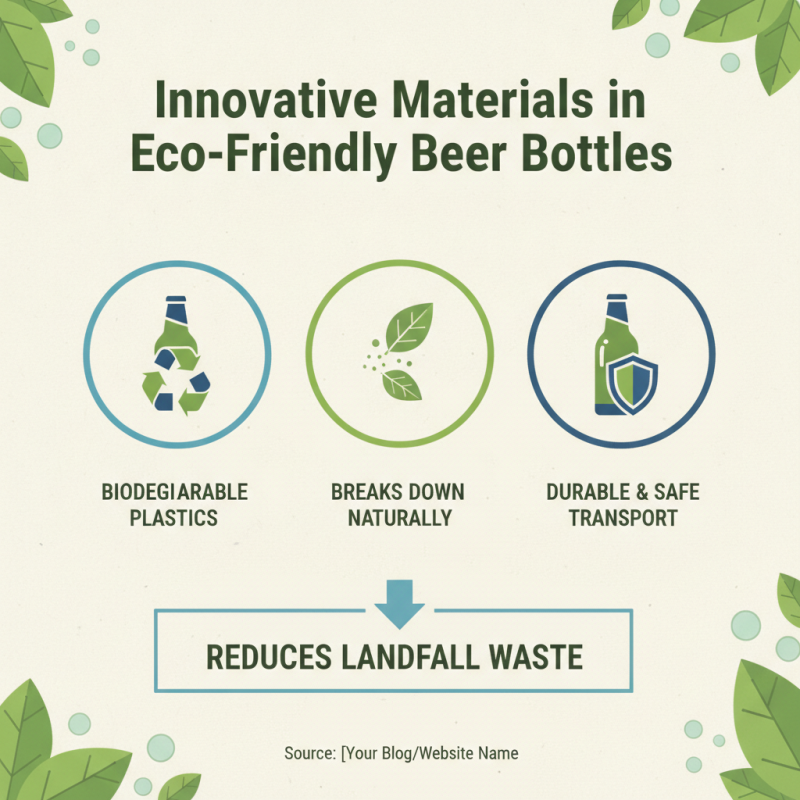
Eco-friendly beer bottles are made from innovative materials that minimize environmental impact. One popular choice is biodegradable plastics, which break down naturally over time. These materials reduce landfill waste significantly. They also offer a similar durability to traditional bottles, ensuring that your product remains safe during transport.
Another promising material is plant-based resin. This resin, derived from renewable sources, provides a sustainable alternative to petroleum-based plastics. It functions well in packaging, maintaining the beer's quality while being less harmful to the planet. Some companies are exploring glass made from recycled materials, further minimizing resource consumption and energy use.
While these options present great potential, some challenges remain. Biodegradable bottles may not perform as well in all conditions. Durability and shelf life are concerns that need addressing. Companies must carefully assess their supply chains and market needs. Striking a balance between sustainability and product integrity is crucial. Adopting eco-friendly bottles is a step towards a greener future, but it requires thoughtful consideration and innovation.